Home Inspection
Knob and Tube Wiring: The Insurance Problem Hiding in Old Massachusetts Homes
Published August 17, 2026
Quick Answer
Knob and tube wiring is an early electrical system found in homes built before 1940. It is not automatically unsafe. It is, however, one of the most expensive surprises a Massachusetts inspection can produce.
The fire risk gets all the attention. Insurance is what actually stops closings. Many carriers will not write a new homeowners policy on a house with live knob and tube. No policy means no loan. No loan means no closing.
If you own a home built before 1940, find out what is behind your walls before a buyer's inspector does.
The inspector aims his flashlight up into the basement joists, and the room goes quiet.
I have watched buyers fall out of love with a house in about four seconds. White porcelain knobs. Single wires running through open air. Cloth insulation that has been drying out since Coolidge was president. You can see the calculation happening on their faces.
Their first thought is always fire. That is the honest reaction, and it is not an unreasonable one. But it is not the thing that ends deals. In my experience the deal ends at the insurance agency, and it usually ends about a week after everyone thought the hard part was over.
Watch: Bobby McShane and I walk through what happened on one of our listings when live knob and tube turned up at the home inspection, and why the seller ended up with far fewer options than they started with.
What you are actually looking at
Knob and tube was the first widely used method of wiring a building for electricity. It went into North American homes starting in the 1880s and stayed common into the 1940s.
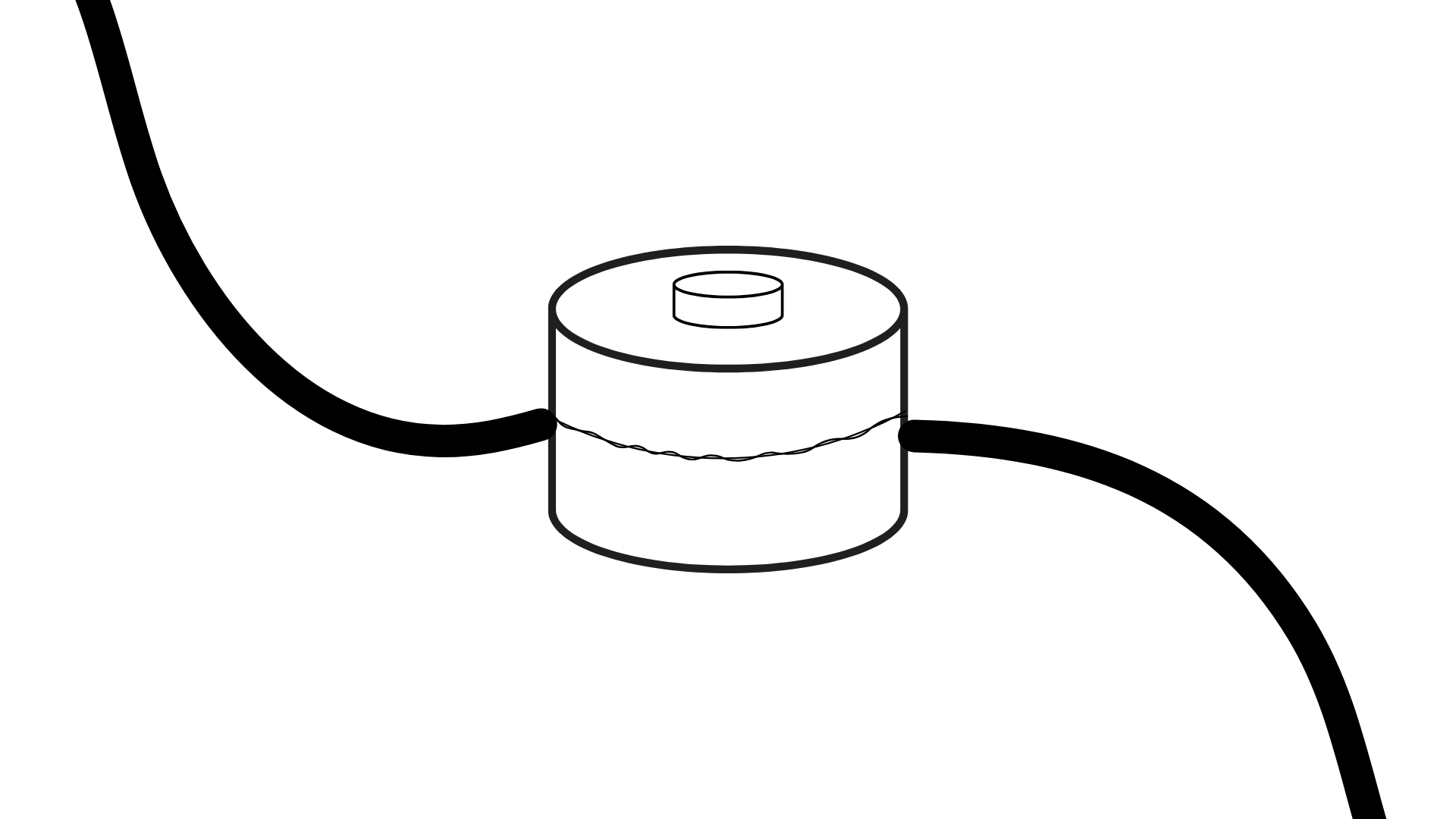
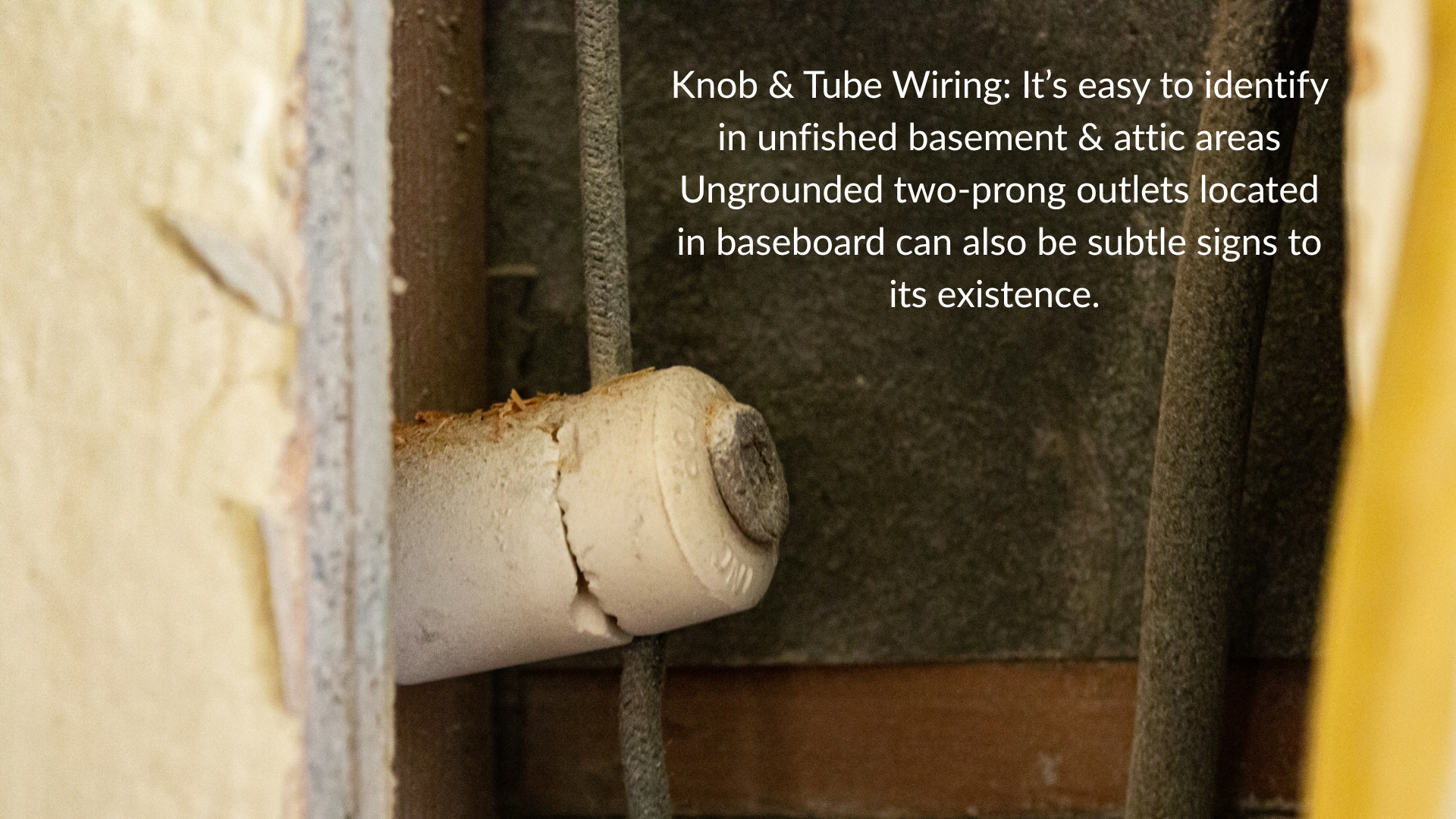
The design is simple. Single copper wires run through wall and ceiling cavities. Porcelain knobs nailed to the framing hold the wires in place. Porcelain tubes line the holes drilled through studs and joists so the wire never touches wood. Where wires entered a fixture or a wall, a woven cloth sleeve called loom protected them.
There was logic behind it. Suspending the wires in open air let them shed heat. That mattered, because the insulation on those early wires was asphalt saturated cotton, and later rubber.
It disappeared for a practical reason more than a safety one. Jacketed cable put both conductors in a single run and cost less to install once electrician labor got expensive. Knob and tube required hand soldered splices and hand wrapped tape. That is slow work.
How to spot it, and how people get it wrong
Once you have seen knob and tube, you will never miss it again. Head to the basement and look up.
You are looking for white or off white porcelain knobs nailed directly into the joists, with wire wrapped around them. You are also looking for wires that travel alone rather than paired inside a sheathed cable. In older installations the supply and return wires were often routed on completely separate paths, which is why the layout can look chaotic.
Here is the part that trips people up. Larger porcelain pieces that look similar sometimes serve as a pass through for a grounding wire and are not knob and tube at all. I have seen sellers panic over hardware that turned out to be nothing. I have also seen buyers waive off a real find because someone told them it was "just the ground." Confirm with a licensed electrician before anyone draws a conclusion.
Is it actually dangerous?
The honest answer is that it depends on what happened to it over the last ninety years.
Knob and tube that was installed correctly, never modified and used within its original limits of roughly ten amperes per circuit is not inherently dangerous. Two states put that position into their building codes.
Washington and Oregon both amended the National Electrical Code to permit insulation over existing knob and tube. Washington's rule sits at WAC 296-46B-394. It allows loose or rolled insulation only if a licensed electrical contractor surveys the wiring and certifies in writing that it is in good condition, with no improper overcurrent protection, no insulation failure, and no improper splices. Foam is prohibited outright. Oregon's version requires a certified inspector to review the visible wiring and requires every defect to be repaired before insulation goes in.
Read those carefully, because they cut both ways. Neither state treats the wiring as safe by default. Both treat it as acceptable only after a qualified person signs off in writing.
Fires do get attributed to it. A weatherization research report from Pennsylvania College of Technology reviewed contributing factors in residential branch circuit fires and found three traced to knob and tube encapsulated in insulation. For scale, the same review found fifteen from mechanical damage or improper installation and eleven from poor or loose splices. Three is a small number. It is not zero.
Which points at the real issue. Almost no ninety year old wiring has been left alone. Here is what actually goes wrong:
What turns old wiring into a real hazard
- Brittle insulation. Cloth and rubber dry out and crumble. Bare conductor is the result.
- Overfusing. Homeowners replaced blown fuses with higher rated ones. That pushes more current through wire that was never built for it.
- Renovation damage. Sixty years of remodels, cut wires, and improper splices tied directly into newer cable without a junction box.
- No ground. There is no safety grounding conductor anywhere in the system.
- Buried splices. Connections were made inside walls without junction boxes, so nobody can inspect them.
- Load. A house wired in 1925 was built for a few light bulbs. It was not built for two heat pumps, a car charger and a home office.
The problem that actually kills deals
Now we get to the part nobody warns you about.
Insurance carriers have taken a position on knob and tube. Many will not write a new homeowners policy on a house that still has live knob and tube in it. Some will write one only after the wiring is fully replaced. Others will write one only if a licensed electrician certifies the condition of the system in writing. A few will accept a partial upgrade where low demand lighting circuits stay in place.
Lenders create a second squeeze. The low capacity electrical service that usually comes with knob and tube can be enough for an institutional lender to hesitate until the service is upgraded.
A buyer cannot close without a policy. If the carrier says no, the calendar stops moving regardless of how good the offer was.
On a listing our team closed recently, live knob and tube turned up at the home inspection. The buyer could not obtain insurance. The seller ended up removing the wiring and bringing the electrical up to current code, which pulled in hardwired smoke detectors and grounded outlets along with it.
That is a very expensive discovery to make while you are already under agreement. The seller had no leverage left, no time to shop the work, and a closing date on the calendar. Every one of those factors costs money.
The insulation trap nobody sees coming
There is a second cost that surprises owners who are not selling at all.
The National Electrical Code has prohibited insulation in direct contact with knob and tube wiring since a 1987 amendment. The whole system depends on shedding heat into open air, and packing insulation around it defeats that. Foam is excluded specifically.
So if you own a pre 1940 house with uninsulated walls and you want to fix your heating bills, the wiring usually has to come out first. This is where a lot of Massachusetts homeowners hit a wall. Energy efficiency programs here can cover a substantial share of insulation and air sealing costs, but the electrical has to clear before any of that work happens.
Washington and Oregon wrote conditional exceptions into their codes. Massachusetts has not adopted one. Confirm your specific situation with a licensed electrician and with your program administrator before you schedule weatherization work.
What it costs, and why that number is negotiable
I want to give you a real story here instead of a range I made up.
Years ago my own electrician bought a two family through me as an investment. The house had knob and tube. The removal number at that time came in around twenty five thousand dollars, and that figure scared off everyone else looking at the property.
He used it as leverage and got the house. Then he did the work himself.
That is the lesson worth carrying. The cost is real, but it is a number, and numbers get negotiated. What you cannot negotiate is finding out about the number too late.
If you are selling a home built before 1940
Do the electrical evaluation before you list. Not after the inspection.
Massachusetts law requires every real estate licensee, regardless of who they represent, to present property honestly and accurately and to disclose known material defects. Your listing agent has that duty. You will also be asked about your building systems on the Seller's Statement of Property Condition. Knowing the answer beforehand is better for you in every direction.
More practically, knowing lets you decide. You can remediate on your own timeline and shop three electricians instead of one. You can price the house with the condition disclosed and let buyers underwrite it up front. Or you can leave it and accept that your buyer pool narrows to cash and renovation loans.
All three are defensible strategies. Only one of them is available to you if the finding shows up at a buyer's inspection.
If you are buying an older home
- Call your insurance agent before the purchase and sale, not after. Ask directly whether the carrier will bind a policy on a home with live knob and tube. This is a five minute phone call that protects your deposit.
- Get a licensed electrician, not just a general inspector. You need a written scope and a number, not an observation.
- Find out how much is still live. Many older homes have been partially rewired. What remains may be dead, and dead wiring is a different conversation.
- Ask about the service panel too. A rewire and a service upgrade often travel together.
- Use your inspection period. This is exactly the situation the contingency exists to protect you from.
And if the number does not work, the number does not work. There's always another house.
The bottom line
Knob and tube is not a haunted house. It is a line item.
The buyers who get hurt are the ones who find out about it in week three of a thirty day close. The sellers who get hurt are the ones who let a buyer's inspector deliver the news. Both outcomes come from the same mistake, which is treating old wiring as a surprise instead of a question you ask early.
Belmont, Watertown, Arlington and Cambridge are full of houses built between 1890 and 1940. Many of them are terrific homes. Ask the question before you fall in love, and this stays what it should be: a scope, a price and a decision.
Thinking about an older home?
Whether you are buying one or selling one, I would rather have this conversation early than watch it happen at an inspection. Reach out and let's talk through your situation.
Talk to MikeSources
- Washington Administrative Code, WAC 296-46B-394, Concealed Knob-and-Tube Wiring. app.leg.wa.gov
- Oregon Building Codes Division, 2021 Oregon Electrical Specialty Code, Adopted Amendments to the 2020 NEC. oregon.gov/bcd
- Weatherization Training Center, Pennsylvania College of Technology, Retrofitting Knob and Tube Wiring: An Investigation into Codes, Assessment and Retrofit. pct.edu
- National Electrical Code, Article 394, Concealed Knob-and-Tube Wiring.
- Massachusetts Board of Registration of Real Estate Brokers and Salespersons, Mandatory Real Estate Licensee-Consumer Relationship Disclosure.
This article is general information and is not legal, insurance, engineering or tax advice. Electrical conditions vary house to house. Consult a licensed Massachusetts electrician for any evaluation or scope of work, your insurance agent for coverage questions, and a Massachusetts real estate attorney for questions about disclosure obligations and contract terms. Background on the history and construction of knob and tube wiring draws on publicly available reference material and industry inspection guidance.